
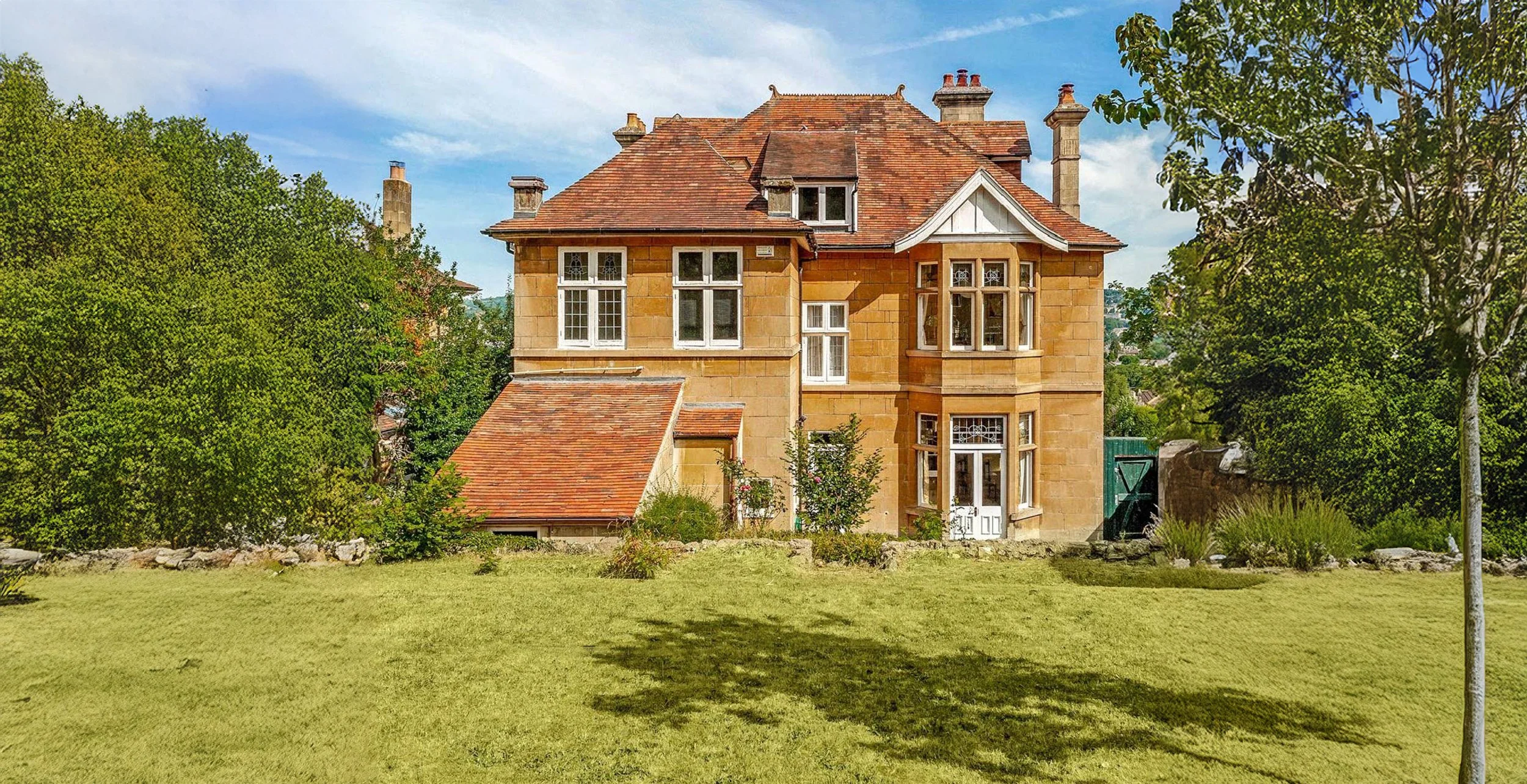
Westmead
Located on the southern slopes of Bath, this project transforms a substantial Edwardian Arts & Crafts villa within Bath’s Conservation Area and UNESCO World Heritage Site.
Commissioned by a multi-generational family, the brief was to deliver an architecturally ambitious extension and sunken courtyard that would future-proof the home, enhance long-term value, and integrate seamlessly with its historic setting.
Location: World Heritage City of Bath
Size: 330sqm
Client: Private Residential
Project Type: New Build Contemporary House
Services: Full Architectural Services, Planning, Technical Design, Tender Management
Status: On-going
Collaborators: Sova Surveys, Giraffe Engineering, Achieve Green
-
Context & Brief
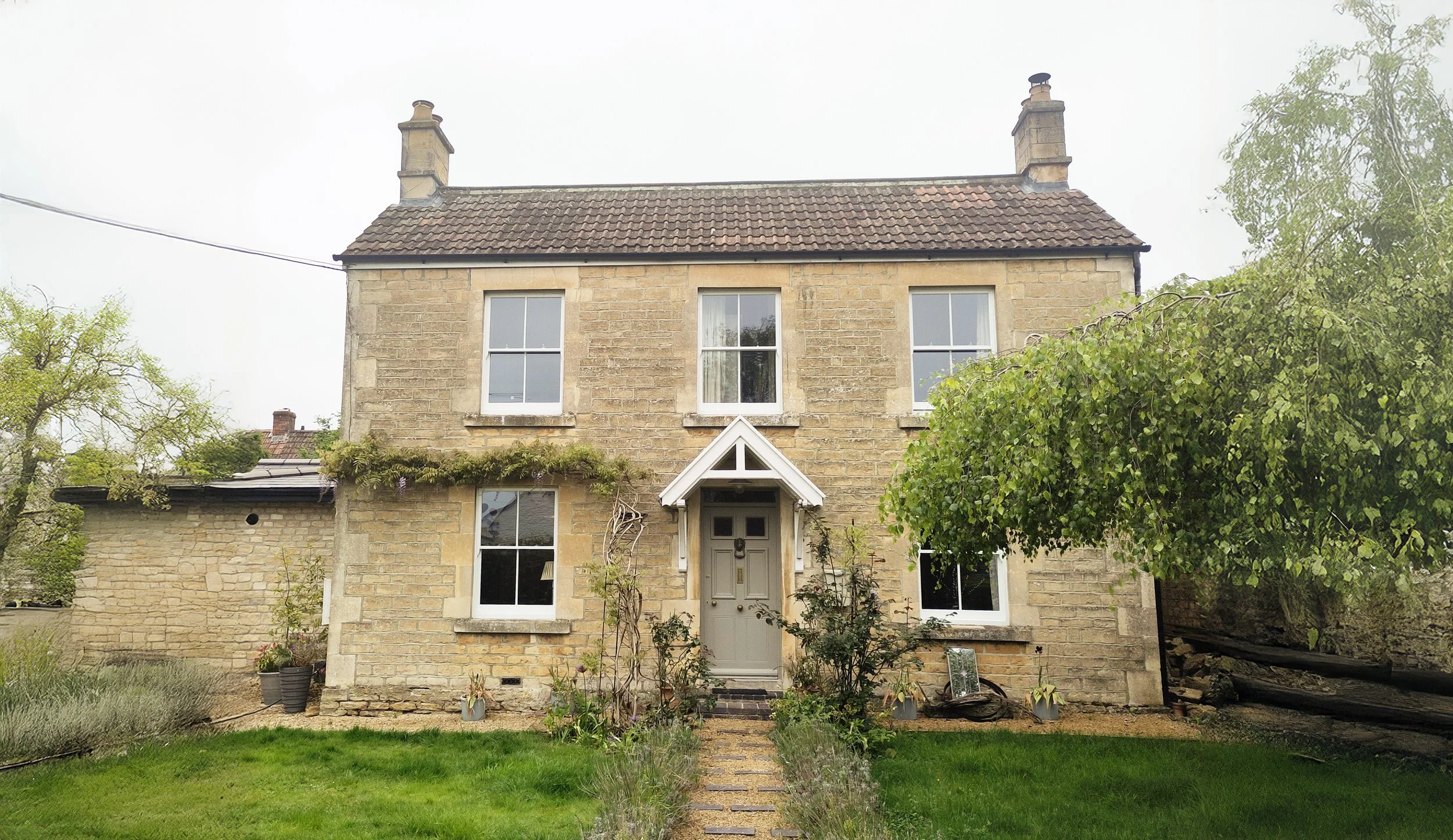
The existing three-storey family home is an impressive villa constructed in Bath stone, with traditional red clay roof tiles and finely detailed period features. While architecturally impressive from the outside, the interior had been incrementally reconfigured over time, resulting in a fragmented layout that no longer supported modern family life. Crucially, the principal kitchen had been relocated to the first floor, leaving the ground level without the essential communal heart required for a triple-generational household.
The design brief was to create a ground-floor kitchen and dining room that would become the hub of the house - a space for the family to congregate. This meant delivering a generous kitchen, step-free access suitable for all family members, a stronger relationship with the garden, and improved parking provision.
Moreover, the clients had a strong desire for the sympathetic use of contemporary materials. The ambition was not simply to extend, but to enhance the quality, functionality, and long-term performance of the property.
-
Design Approach
Our strategy was to introduce a confident contemporary intervention that complements - rather than mimics - the original Edwardian architecture.
The new single-storey kitchen extension replaces a former lean-to with a precisely detailed volume defined by an asymmetric pitched roof in earthy red zinc (VM Zinc Pigmento Red). The tone subtly reflects the weathered clay tiles of the existing house, creating visual continuity between old and new.
Working with bespoke joiners, a glazed corridor framed in Accoya timber forms a refined threshold between the original villa and the new extension. This connects to a carefully detailed timber pergola that provides solar control and seasonal shading. Internally, the design is characterised by the folding planes of the roof, which bounces light from the extensive Accoya-framed by glazing and a linear rooflight, enhancing spatial quality throughout the day.
Bath stone continues onto the extension walls, using reclaimed masonry where possible, supplemented with new ashlar sourced locally from a local quarry in Bath. Lime mortar joints match the original detailing, ensuring material integrity and longevity.
The garden was developed in parallel with the architecture, resulting in a design that nestles within the steep topography while opening out to a sunken courtyard. Planting beds are strategically placed to soften the hard surfaces, blurring the edges of the courtyard.
-
Outcome & Impact
The result is a high-quality, light-filled family space that redefines the ground floor as the social heart of the home.
The new addition enhances spatial flow, improves accessibility, and strengthens the connection between house and garden. Carefully considered materials and detailing ensure that the extension sits comfortably within its historic context while expressing a modern identity.
This is a project defined by precision: practicality, junction detailing, material selection, and contextual sensitivity. It demonstrates how ambitious contemporary design can be applied to domestic-scale architecture. The new building is compact, but it packs a punch.
-
Technical Details
One of the principal technical challenges was working on a steeply sloping site, which required carving out a sunken courtyard to give the extension much-needed breathing space. Once the retaining walls were installed, the building began to take shape.
The asymmetric pitched roof -expressed internally as well as externally - was a key design feature. This visual language carries through the architecture, including a bespoke glazed gable, a striking linear rooflight, and a lightweight glazed connection to the existing house.
The pergola became an influential component of the design, integrating seamlessly with the building. It required careful detailing to sit elegantly against the existing house, achieved through a bespoke spaced-column arrangement and custom-coloured steel connections.
The material palette balances modern industrial elements with the warmth of Bath stone and timber. Additional features include a bespoke rain chain, a glazed pocket door, and Crittall-style internal doors.
-
Challenges & Problem Solving
Heritage Context
Designing within the Bath Conservation Area required a proposal that preserves and enhances character while clearly expressing contemporary craftsmanship. This was achieved through disciplined massing, refined roof geometry, and a carefully curated material palette.
Multi-Generational Accessibility
Returning the kitchen to ground level and maintaining step-free access ensures the home functions inclusively, without compromising architectural clarity.
Topography
The steeply sloping garden required coordinated architectural and landscape solutions to create usable external spaces and seamless internal thresholds.
“Carly of ReFrame Studio architects came to our aid at a time of real need when our project had ground to a halt due to the ill health of our previous architect. She was able to pick the pieces up, listen carefully where we were concerned that the brief hadn’t been met and inject a fantastic blend of pace and artistic flair to get us back on track.”
Daniel Weil
Other projects
-
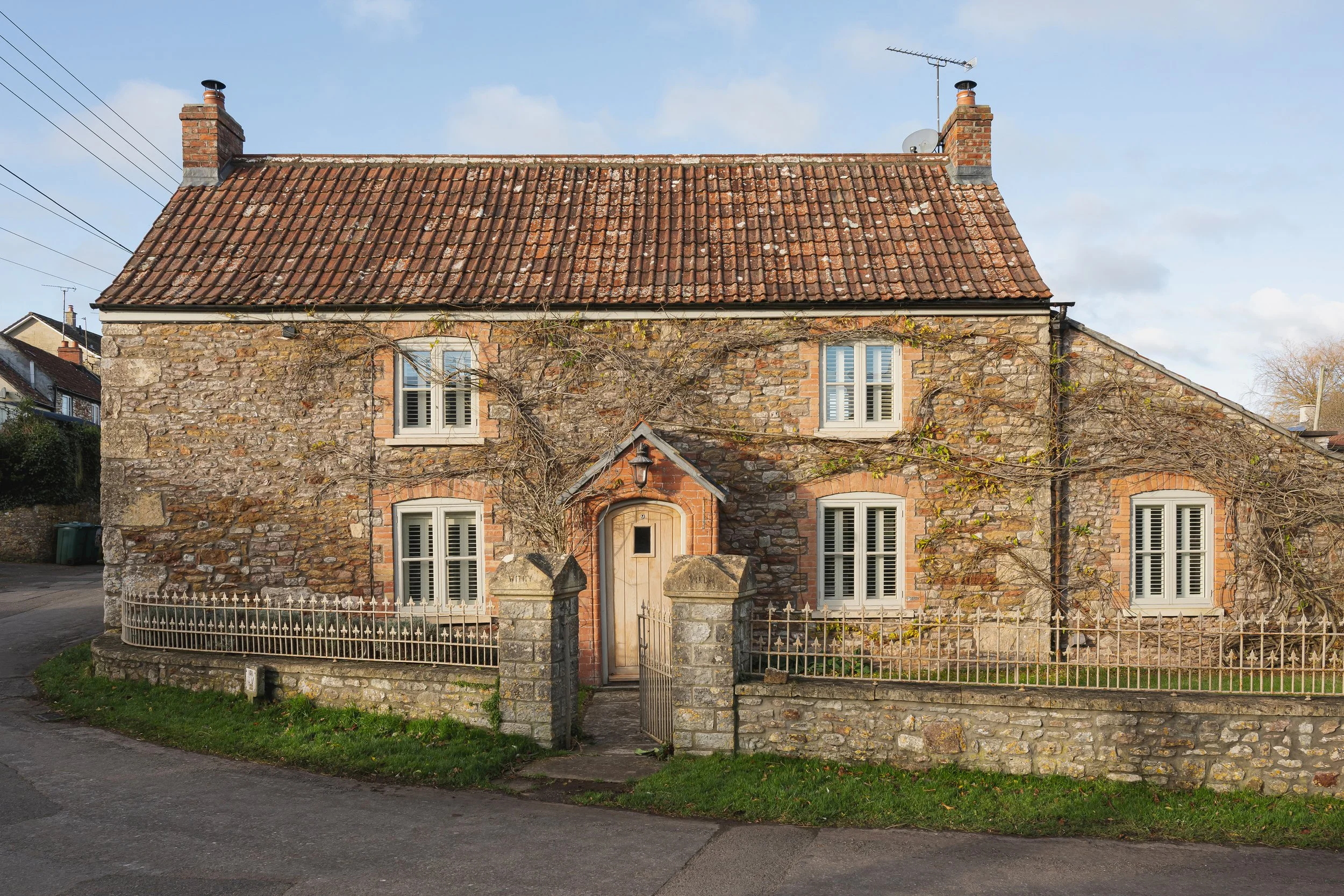
![An image of a home renovated at Withy Villa]()
Withy Villa
Internal Cottage Renovation
-
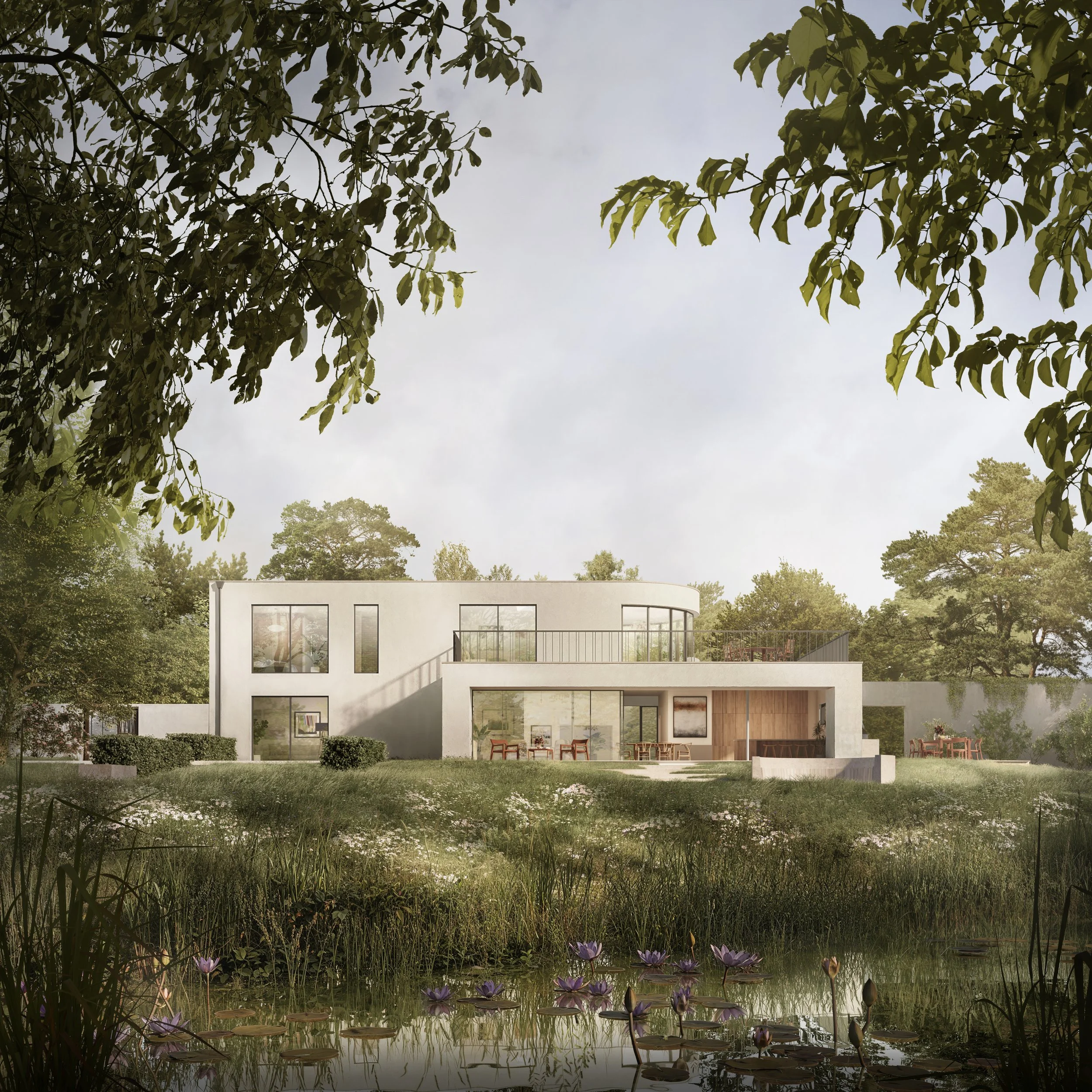
![An image of a contemporary home built at Monks Lake]()
Netley Abbey
Contemporary Lakeside Home
-
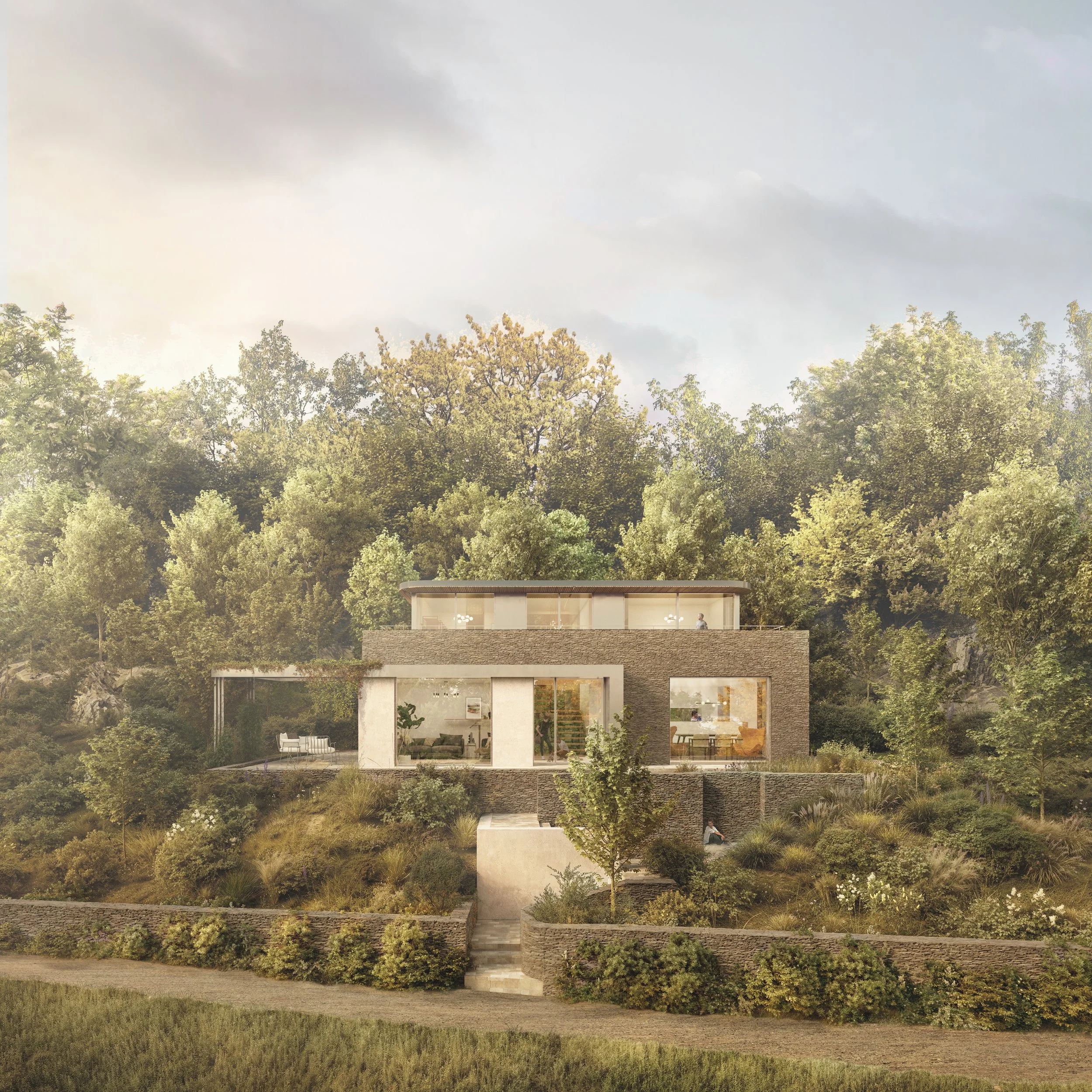
![An image of a contemporary home built at Green Pastures]()
Green Pastures
Modern Reimagining in Exmoor
-
![The Bide eco-cabin with distinctive burgundy corrugated metal cladding and large picture window, nestled in Dorset countryside surrounded by wild grasses and hedgerows at golden hour]()
The Bide
Wikihouse Cabin in Dorset
-
![Modern house with black and wood exterior, large windows, and outdoor seating areas surrounded by trees and greenery.]()
Southern Wood
Woodland Barn-Style New Build
-
![Modern interior featuring a black table, a black chair, a wooden wall with vertical slats, a staircase with wooden and white side panels, and a doorway with a frosted glass side panel.]()
Vine Lane
Contemporary Refurbishment and Garden Transformation
-
![A row of Victorian-style brick houses with bay windows, small front yards enclosed by brick and metal fences, and a sidewalk with fallen leaves.]()
Somerset Road
Victorian Terrace Reconfiguration, London
-
![A modern two-story house with large glass windows, surrounded by trees and landscaping, featuring a stone and wood exterior, with a garage and outdoor seating area.]()
Bonnie Banks
Contemporary Living in Historic Bath
-
![A large, historic house with a red-tiled roof, multiple chimneys, and a sandstone exterior, surrounded by green trees and a grassy lawn under a partly cloudy sky.]()
Westmead
Contemporary Extension to an Edwardian Home
-
![Modern house with large glass windows, outdoor pool, stairs, landscaped plants, and trees under cloudy sky.]()
Somerset Farm
Blending Modern Living with Rural Beauty
-
![Stone house with three stories, white window frames, a gray front door, surrounded by greenery and a garden.]()
Whitley
Heritage Home Meets Modern Accessibility


Info
Micro-houses & Holiday Cabins
Passivhaus Design
Project Management
Client Design Advisor
Services
Full Architectural Services
Feasibility Studies
Interior Design
Furniture Selection
CNC Fabrication
Locations
Bath Studio
Trinity Church
Chapel Row
Bath
BA1 2HN
Dorset Studio
Wilton House
4 Alum Chine Road
Bournemouth
BH4 8DY

Contact
carly@reframestudio.co.uk
Contact
scott@reframestudio.co.uk

Architecture &
Spatial Design Services
Company No. 11652386