

Bonnie Banks
Bonnie Banks is a contemporary detached residence designed for a prominent hillside site within the City of Bath.
Providing full services from Concept Design through to Planning Approval, Technical Design and Tender Management, the project delivers a 330m² new-build home that balances architectural clarity with contextual sensitivity.
Located opposite the Grade I listed park and gardens of Prior Park , the design demonstrates how high-quality contemporary architecture can sit confidently within one of the UK’s most historically significant settings.
Planning approval was successfully secured, recognising both the architectural ambition of the proposal and its respectful response to Bath’s distinctive character.
Location: World Heritage City of Bath
Size: 330sqm
Client: Private Residential
Project Type: New Build Contemporary House
Services: Full Architectural Services, Planning, Technical Design, Tender Management
Status: On-going
Collaborators: Sova Surveys, Giraffe Engineering, Achieve Green

-
Context & Brief
The site occupies an elevated position on the southern slopes of Bath, characterised by mature trees, valley views and a strong architectural context shaped by historic stone buildings. Its prominence and proximity to listed properties demanded a carefully considered design approach.
The brief was to create a spacious, light-filled modern home that would maximise panoramic views across the valley and respond sensitively to the natural topography. Moreover, it needed to deliver a high-performance family home that sits comfortably within its green setting.
The ambition was to create a contemporary house of architectural integrity - not a pastiche of historic forms, but a confident addition to the evolving story of the hillside.
-
Design Approach
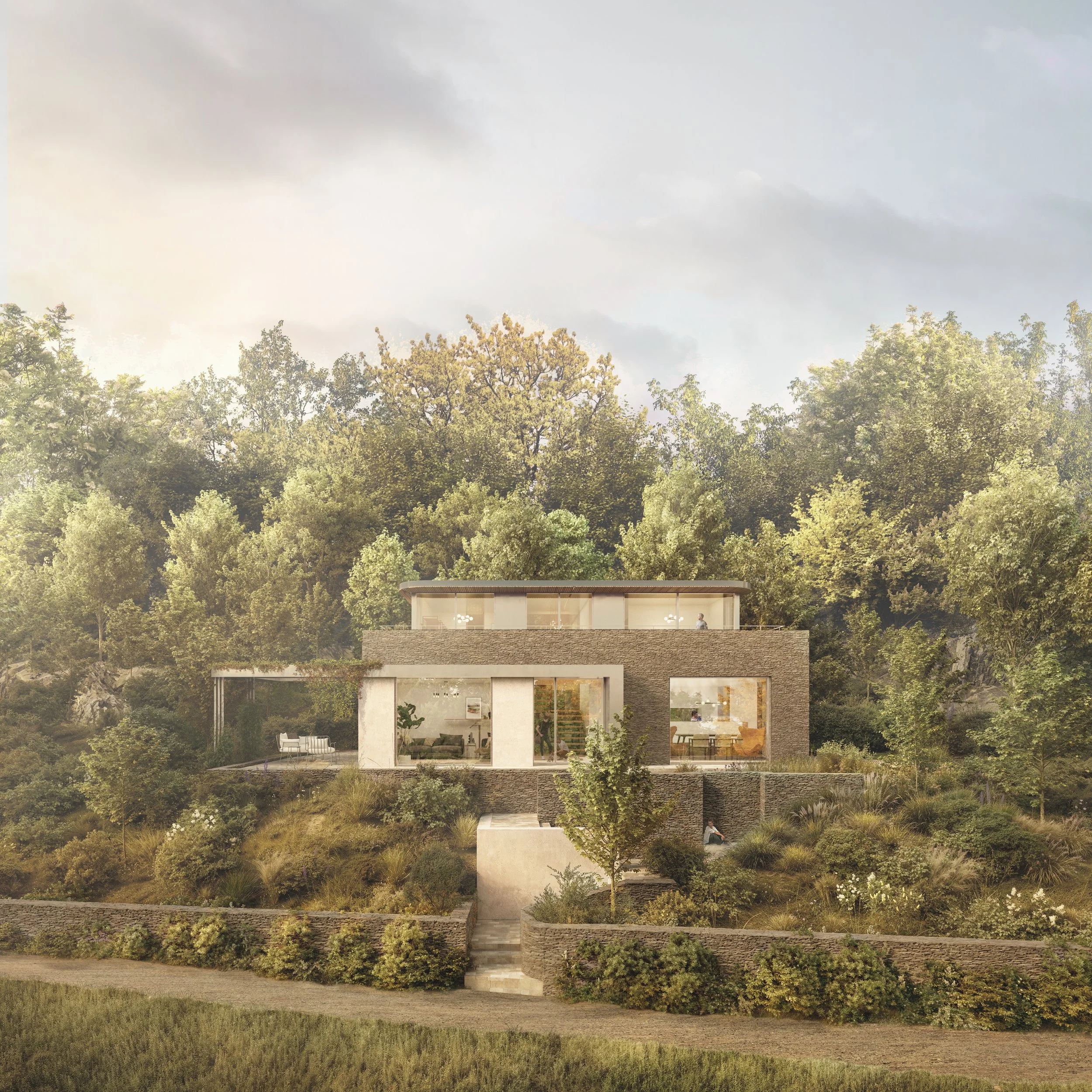
The architectural strategy responds directly to the site’s slope. Rather than impose a singular mass, the 330m² home adopts a stepped two-storey form that follows the natural contours of the land, reducing visual impact and embedding the building into the landscape.
The composition is defined by clean horizontal lines, generous glazing, and carefully framed volumes. Large expanses of glass orientate primary living spaces towards valley views, while simultaneously flooding the interiors with natural light.
Materiality plays a central role in mediating between contemporary form and historic context. A restrained palette of Bath stone, Warm timber cladding and planted terraces ensures the building sits comfortably within its mature surroundings. The natural tones echo the honey-coloured stone of the city while softening the architectural edges through landscape integration.
Externally, planted terraces step down the hillside, reinforcing the building’s relationship with the terrain and providing usable outdoor spaces connected directly to internal living areas. A new driveway and carefully composed approach sequence enhance the sense of arrival without competing with the architecture.
-
Outcome & Impact
Bonnie Banks presents a confident yet respectful contemporary home within the Bath World Heritage context.
The stepped massing reduces perceived scale from key viewpoints, while the use of natural materials ensures the house integrates seamlessly into its green hillside setting. Internally, the design delivers expansive, light-filled living spaces that prioritise outlook, privacy and environmental performance.
Securing planning approval for a modern new-build of this scale in such a sensitive location is a significant achievement. The approval reflects the strength of the architectural concept, the rigour of the contextual analysis, and the quality of the detailed design work.
The project demonstrates how thoughtful contemporary design can enhance - rather than detract from -Bath’s historic environment.
-
Technical Details
The 330m² house is organised across two principal storeys, stepping with the natural gradient of the site to minimise cut-and-fill and reduce visual massing.
Large-format glazing units are carefully positioned to frame views while managing solar gain. Deep overhangs and terrace projections provide passive shading and environmental moderation.
The structural strategy accommodates the changing levels across the site, with retaining elements integrated into the architectural language. External terraces are designed as extensions of the internal floor plates, reinforcing indoor–outdoor continuity.
The material palette combines charred timber, bath ashlar stone and rubble stone. The masonry elements seek to ground the building the hillside, while the vertical timber cladding reaches for the trees beyond.
-
Challenges & Problem Solving
Heritage Context
Designing a contemporary new-build adjacent to listed buildings within Bath’s World Heritage Site required a disciplined and evidence-led approach. Careful attention was given to scale, massing, roofline, and material selection to ensure the proposal preserves and enhances the surrounding character.
Topography
The steep hillside setting presented both a constraint and an opportunity. By stepping the building form and integrating planted terraces, the design minimises visual impact while creating dynamic internal and external spaces.
Visual Prominence
Given the elevated position and long-range views across the valley, the building’s silhouette and materiality were critical. The restrained palette and landscape-led strategy ensure the house reads as part of the hillside rather than an imposition upon it.
Other projects
-
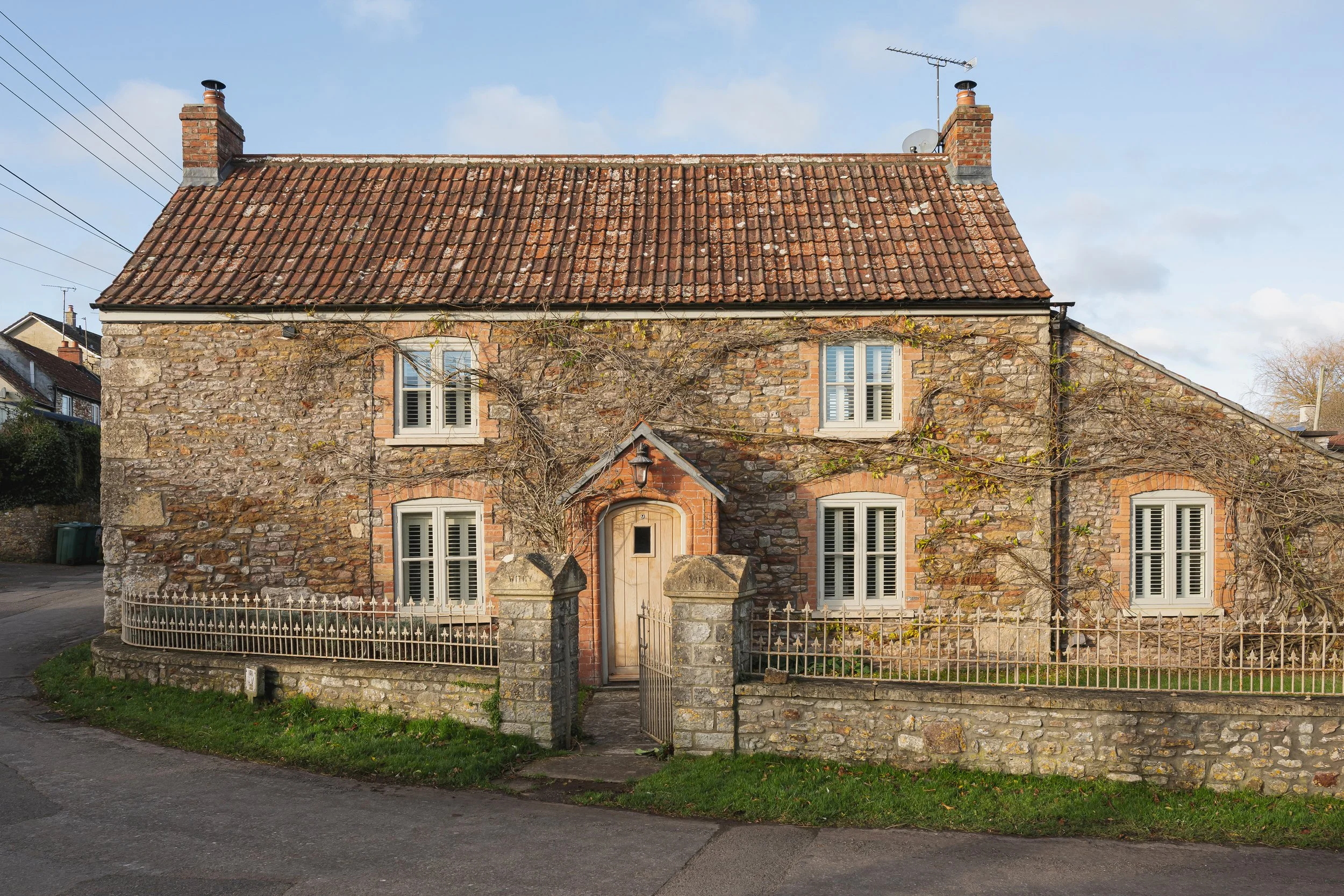
![An image of a home renovated at Withy Villa]()
Withy Villa
Internal Cottage Renovation
-
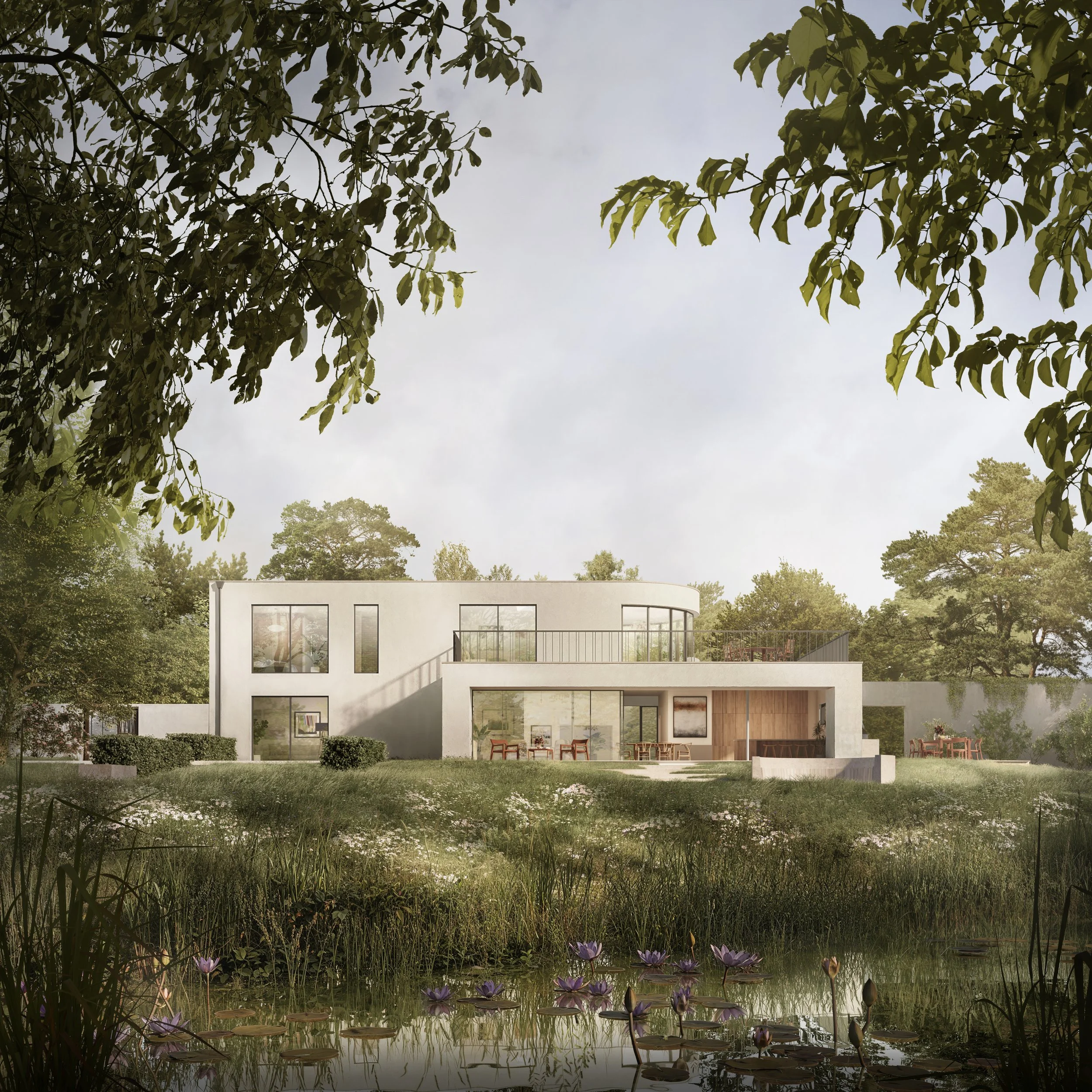
![An image of a contemporary home built at Monks Lake]()
Netley Abbey
Contemporary Lakeside Home
-
![An image of a contemporary home built at Green Pastures]()
Green Pastures
Modern Reimagining in Exmoor
-
![The Bide eco-cabin with distinctive burgundy corrugated metal cladding and large picture window, nestled in Dorset countryside surrounded by wild grasses and hedgerows at golden hour]()
The Bide
Wikihouse Cabin in Dorset
-
![Modern house with black and wood exterior, large windows, and outdoor seating areas surrounded by trees and greenery.]()
Southern Wood
Woodland Barn-Style New Build
-
![Modern interior featuring a black table, a black chair, a wooden wall with vertical slats, a staircase with wooden and white side panels, and a doorway with a frosted glass side panel.]()
Vine Lane
Contemporary Refurbishment and Garden Transformation
-
![A row of Victorian-style brick houses with bay windows, small front yards enclosed by brick and metal fences, and a sidewalk with fallen leaves.]()
Somerset Road
Victorian Terrace Reconfiguration, London
-
![A modern two-story house with large glass windows, surrounded by trees and landscaping, featuring a stone and wood exterior, with a garage and outdoor seating area.]()
Bonnie Banks
Contemporary Living in Historic Bath
-
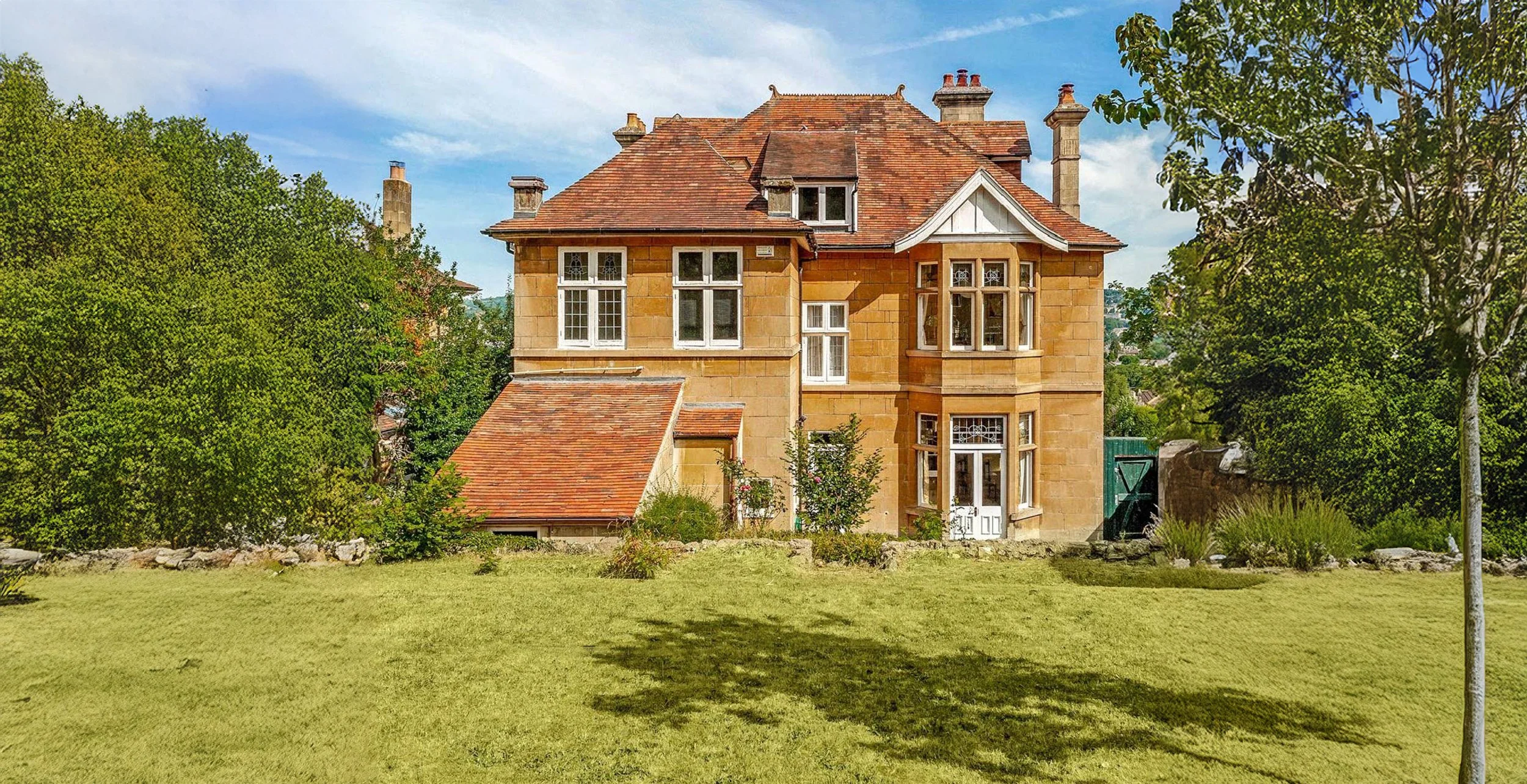
![A large, historic house with a red-tiled roof, multiple chimneys, and a sandstone exterior, surrounded by green trees and a grassy lawn under a partly cloudy sky.]()
Westmead
Contemporary Extension to an Edwardian Home
-
![Modern house with large glass windows, a swimming pool in the foreground, and a landscaped garden with purple flowers and greenery under a cloudy sky.]()
Somerset Farm
Blending Modern Living with Rural Beauty
-
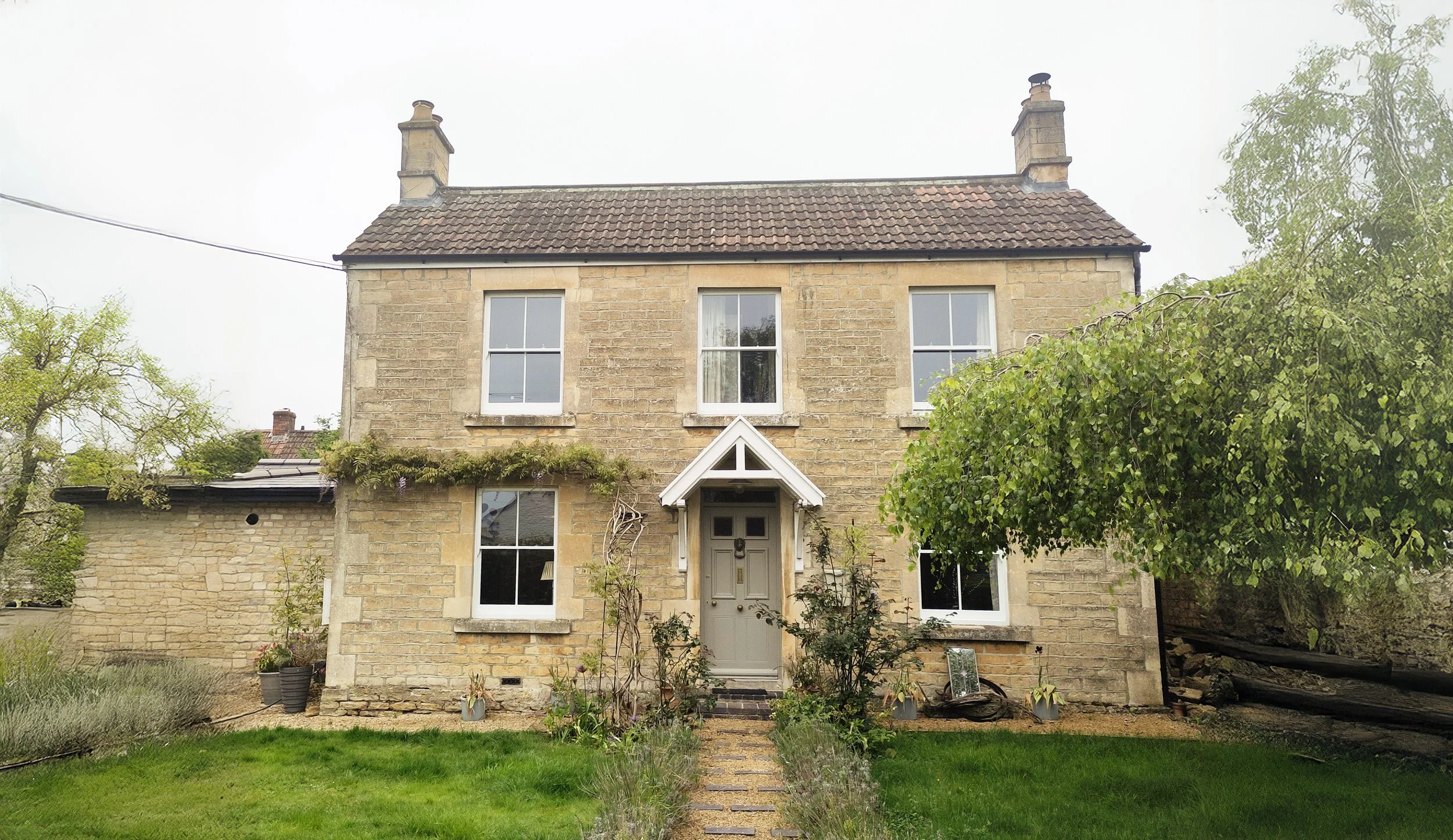
![Stone house with three stories, white window frames, a gray front door, surrounded by greenery and a garden.]()
Whitley
Heritage Home Meets Modern Accessibility



Info
Micro-houses & Holiday Cabins
Passivhaus Design
Project Management
Client Design Advisor
Services
Full Architectural Services
Feasibility Studies
Interior Design
Furniture Selection
CNC Fabrication
Locations
Bath Studio
Trinity Church
Chapel Row
Bath
BA1 2HN
Dorset Studio
Wilton House
4 Alum Chine Road
Bournemouth
BH4 8DY

Contact
carly@reframestudio.co.uk
Contact
scott@reframestudio.co.uk

Architecture &
Spatial Design Services
Company No. 11652386