
Sustainable Design
Sustainable Solutions for New Builds and Historic Retrofits
At ReFrame Studio, we approach sustainability as an opportunity to rethink how buildings are made and how they perform over time.
With Passivhaus-certified expertise, we design spaces that prioritise ultra-low energy use, exceptional comfort, and long-term resilience.
Our portfolio ranges from exploring emerging construction systems such as WikiHouse to delivering thoughtful, high-performance retrofits that extend the life of existing buildings.
Through a careful balance of innovation, technical rigour, and contextual sensitivity, we aim to create architecture that reduces environmental impact while enriching the way people live and work.
What is the Passivhaus standard?
The Passivhaus standard is a rigorous, performance-based approach to building design developed by the Passive House Institute. It focuses on dramatically reducing a building’s energy demand through a highly efficient building fabric and careful design.
Key principles include very high levels of insulation, excellent airtightness, minimised thermal bridging, high-performance windows, and continuous mechanical ventilation with heat recovery (MVHR). Together, these elements allow buildings to maintain a comfortable indoor temperature with very little need for conventional heating or cooling.
At ReFrame Studio, this expertise is embedded in our practice. Our founding director, Carly, is a certified Passivhaus designer, ensuring these principles are applied with technical rigour and clarity from the outset.
What is the EnerPHit standard?
EnerPHit is a high-performance retrofit standard developed by the Passive House Institute. It applies Passivhaus principles such as insulation, airtightness, and efficient ventilation to existing buildings, with more flexible targets to reflect real-world constraints.
The aim is to significantly reduce energy use, improve comfort and air quality, and extend the life of existing buildings through a practical, fabric-first approach to refurbishment.
What forms of low energy construction are there?
Low energy construction is closely linked to Modern Methods of Construction (MMC), which focus on improving build quality, precision, and consistency. By manufacturing elements off-site or using highly controlled systems, these approaches help achieve better airtightness and significantly reduce thermal bridging, both of which are essential for lowering energy demand.
We have experience working with a range of these systems, including WikiHouse, Structural Insulated Panels (SIPs), close panel timber construction, and Insulated Concrete Formwork (ICF). Each offers different benefits, but all contribute to creating highly efficient building envelopes that perform reliably over time.
By selecting the most appropriate system for each project, we can deliver buildings that are not only low in energy use, but also quicker to construct, more consistent in quality, and better suited to meeting modern sustainability standards.
How sustainable can a refurbishment be?
Refurbishment can be one of the most sustainable approaches to building. Existing structures already contain a significant amount of embodied carbon, so retaining and upgrading them often has a far lower environmental impact than demolishing and rebuilding. Put simply, the most sustainable building is often the one that already exists.
That said, working with what’s there doesn’t mean compromising on design. A well-considered refurbishment can completely transform both the internal and external appearance of a building. Our Vine Lane project is a strong example of how existing fabric can be reimagined to create something contemporary, high-performing, and full of character.
Performance is equally important. Many older buildings are inherently leaky and poorly insulated, so improving airtightness and introducing insulation in the right places is key. By upgrading the building fabric carefully and intelligently, we can dramatically reduce energy demand while enhancing comfort, longevity, and overall sustainability.
Can you help with sustainable technologies?
Yes, we can support you in navigating and integrating sustainable technologies as part of your project. We work with a trusted network of suppliers and installers, allowing us to recommend reliable, well-tested systems suited to your specific needs.
At an early stage, we can provide a clear, high-level overview of the technologies available. From renewable energy systems to low-carbon heating, along with guidance on current grants and funding opportunities. This helps you make informed decisions without unnecessary complexity.
We also draw on feedback from our previous clients and completed projects, continuously learning and refining our approach. This means our recommendations are grounded not just in theory, but in real-world performance, usability, and long-term value.
What is a Fabric First approach to design?
A Fabric First approach to design focuses on optimising the performance of a building’s envelope. It focuses on the walls, roof, floors, windows, and doors before relying on mechanical or renewable energy systems. By prioritising high levels of insulation, airtightness, and thermal bridge-free detailing, this approach reduces energy demand at its source, creating buildings that are inherently efficient, comfortable, and durable.
Rather than adding complexity through bolt-on technologies, Fabric First emphasises getting the fundamentals right from the outset. The result is lower operational energy use, improved indoor comfort, and reduced long-term maintenance, forming a robust foundation for truly sustainable architecture
What low embodied carbon construction methods have you used?
We prioritise construction methods that minimise embodied carbon while maintaining high performance and build quality.
Our experience includes using WikiHouse systems, which enable precision-engineered, low-waste timber construction with a strong emphasis on circular design principles.
We have also worked with Structural Insulated Panels (SIPs), offering excellent thermal performance with reduced material use and efficient on-site assembly. In addition, our projects frequently incorporate timber frame construction, taking advantage of renewable materials and carbon sequestration to significantly lower the overall environmental impact. By carefully selecting and combining these approaches, we deliver buildings that are both low in embodied carbon and high in long-term value.
Low Energy Projects
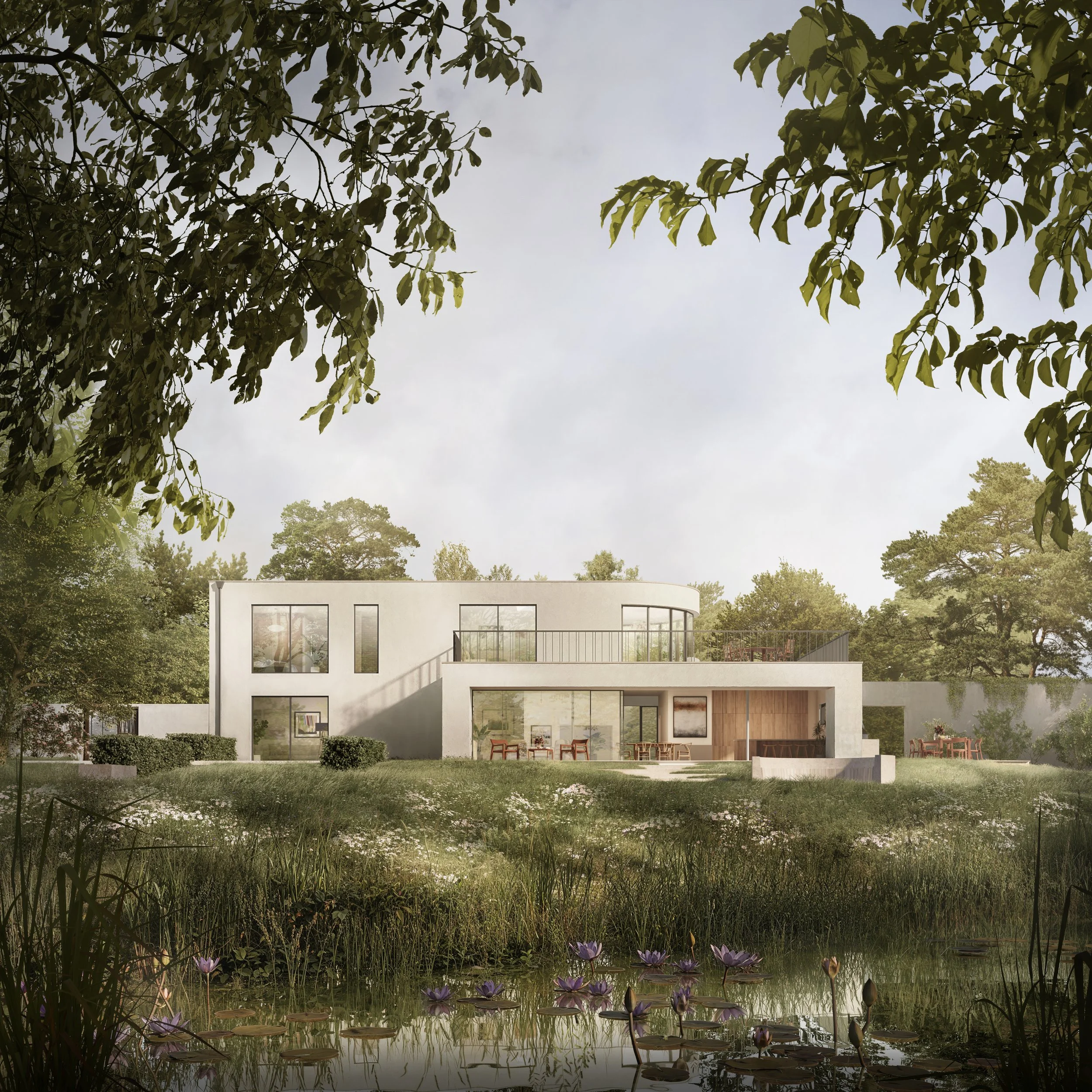
Netley Abbey
New Build A-Rated Home
Netley Abbey is a new-build home designed with a strong fabric-first approach, prioritising the performance of the building envelope from the outset. By significantly exceeding standard U-value requirements, the project achieves an Energy Performance Certificate rating of A, ensuring low operational energy demand and long-term efficiency.
The home integrates a range of sustainable technologies, including an air source heat pump (ASHP), mechanical ventilation with heat recovery (MVHR), solar panels, and battery storage—working together to minimise energy use and maximise on-site generation.
Embodied carbon was carefully considered throughout the project. Concrete from the existing house was crushed and reused on site, reducing waste and the need for new materials. Sustainable drainage strategies were also embedded into the design, with features such as a swale, rill, and rain gardens managing surface water naturally while enhancing the landscape.
The result is a high-performing, low-energy home that balances environmental responsibility with thoughtful, contemporary design.
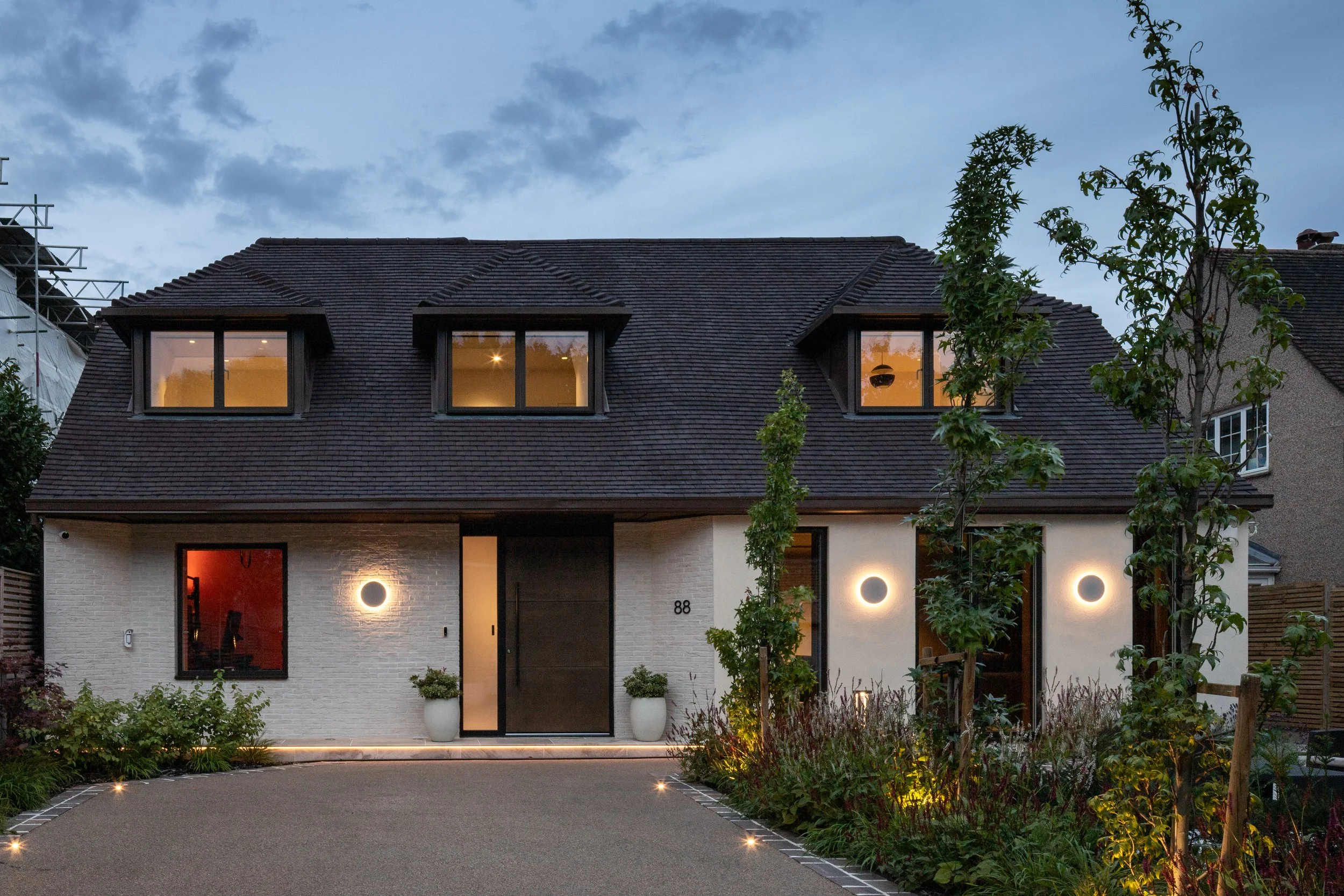
Vine Lane
Extensive Retrofit
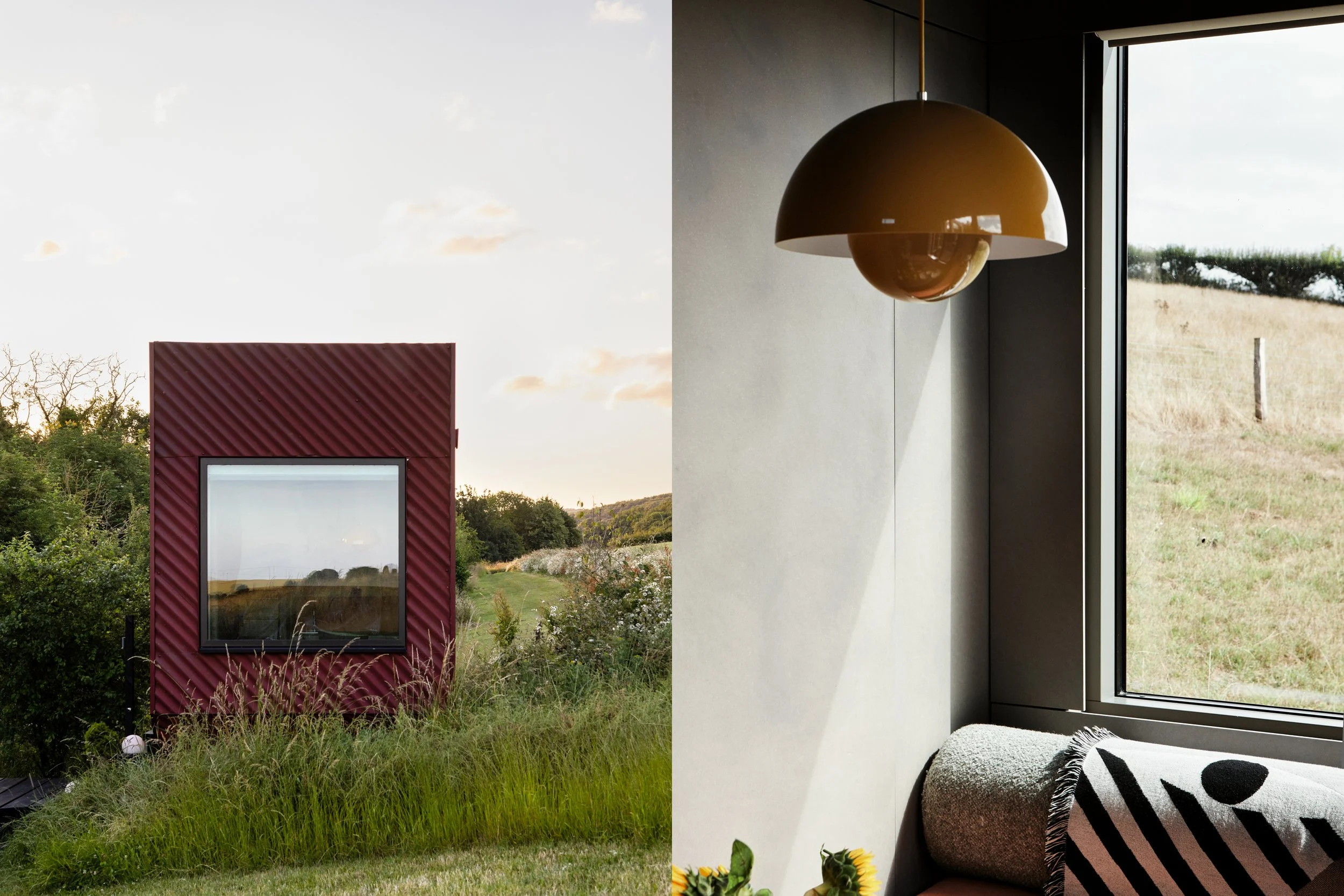
The Bide
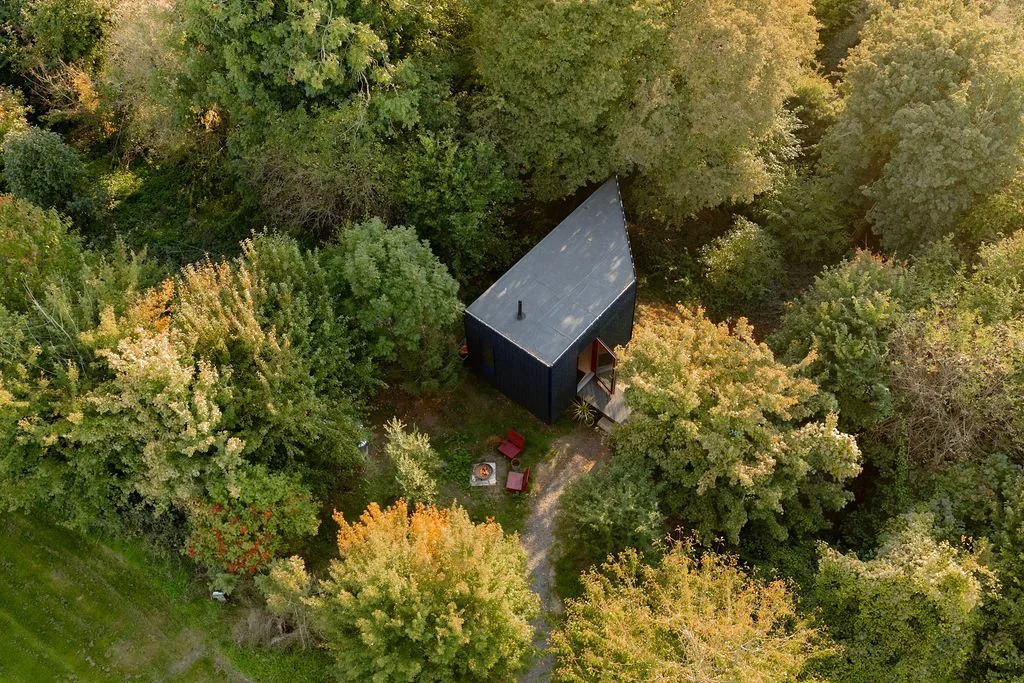
Low-impact Holiday Cabin
Passivhaus FAQs
-
Passivhaus homes are built using a Fabric First approach, prioritising the performance of the building envelope from the outset. This means designing walls, roofs, floors, windows, and junctions to minimise heat loss and maximise efficiency before adding technologies.
Key elements include very high levels of insulation, exceptional airtightness, and careful detailing to eliminate thermal bridges. High-performance windows are positioned to optimise solar gain, while Mechanical Ventilation with Heat Recovery (MVHR) provides fresh air while retaining heat.
Build quality is essential. Systems such as timber frame or SIPs are often used to ensure precision and airtightness, supported by on-site testing. The result is a comfortable, low-energy building that requires minimal heating or cooling.
-
Yes, but very little.
A Passivhaus building still requires some form of heating, but the demand is dramatically reduced due to its highly efficient fabric.
Because of high levels of insulation, excellent airtightness, and heat recovery ventilation, most of the heat comes from passive sources such as sunlight, occupants, and everyday activities. Any additional heating is typically minimal and can often be provided through a small system, sometimes integrated into the ventilation system itself.
The result is a home that stays consistently comfortable year-round, with very low energy use compared to conventional buildings.
-
Yes. Existing buildings can be upgraded to meet Passivhaus principles, but achieving full Passivhaus certification is often challenging due to structural, spatial, and heritage constraints. Instead, many retrofit projects follow the Passive House Institute’s EnerPHit standard, which sets ambitious yet more achievable targets for existing buildings.
A Passivhaus-level retrofit focuses on improving the building fabric as much as possible: adding high levels of insulation, significantly improving airtightness, reducing thermal bridges, and installing high-performance windows and ventilation with heat recovery. The extent of these upgrades depends on the condition and limitations of the existing structure.
While not every building can reach full Passivhaus certification, it is often possible to achieve very low energy performance through a well-designed, fabric-first retrofit- dramatically improving comfort, reducing energy use, and extending the life of the building.
-
Passivhaus buildings are typically more expensive to construct than conventional buildings, largely due to the higher specification of materials, the precision required on site, and the detailed design and coordination involved. Achieving the standard also includes a formal certification process through the Passive House Institute, which adds further cost and requires rigorous modelling, documentation, and verification.
The additional investment is generally associated with enhanced insulation, high-performance windows, exceptional airtightness, and mechanical ventilation with heat recovery, as well as the time needed to carefully design and deliver these elements correctly.
However, these upfront costs are balanced by significantly lower energy bills, reduced maintenance, and improved comfort over the building’s lifetime. With the right approach, Passivhaus can still represent strong long-term value, despite the higher initial outlay.
-
No, Passivhaus homes don’t have to look any different from conventional buildings. The standard is based on performance, not style, so it can be applied to a wide range of architectural expressions, from traditional to contemporary.
While the design process may influence certain elements such as window placement to optimise solar gain or slightly thicker walls due to increased insulation these are typically subtle and can be fully integrated into the overall design.
In practice, a Passivhaus building can look however you want it to. The focus is on what’s happening beneath the surface: a highly efficient, comfortable, and well-performing building that doesn’t compromise on aesthetics.
-
Yes, Passivhaus is very well suited to the UK climate. In fact, it performs particularly well in the UK’s temperate conditions, where reducing heat loss during long, cool seasons is key.
The standard was developed in a similar Northern European climate, so its principles (high insulation, airtightness, and heat recovery ventilation) are highly effective at maintaining comfortable indoor temperatures throughout the year. Passivhaus buildings also manage summer conditions well, using shading, ventilation, and careful design to prevent overheating.
In the UK context, this results in homes that are warm in winter, comfortable in summer, and consistently low in energy use, making Passivhaus a highly appropriate and proven approach for our climate.
-
No, you don’t need Passivhaus certification to benefit from Passivhaus principles.
Many projects choose to adopt a “Passivhaus approach,” using the same core strategies, high insulation, excellent airtightness, reduced thermal bridging, and heat recovery ventilation without going through the formal certification process set by the Passive House Institute.
Certification does provide independent verification that the building meets the standard, which can be valuable for quality assurance, funding requirements, or long-term performance guarantees. However, it also involves additional cost, documentation, and time.
In many cases, it’s possible to achieve very similar levels of comfort and energy performance without certification, by focusing on good design, careful detailing, and high-quality construction.
-
Yes. We act as your point of contact and liaise with the local authority throughout the process.