
Micro Homes & Holiday Cabins
Specialist Architects for Holiday Cabins, Pods, and Micro-Homes
Compact living and retreat architecture continue to grow in appeal, as more people look for micro houses, tiny homes and holiday cabins that offer simplicity, flexibility and a stronger connection to the landscape. Whether designed as a rural retreat, guest accommodation or a carefully considered self-build, small buildings allow for more intentional living, prioritising quality of space, light and materials over size.
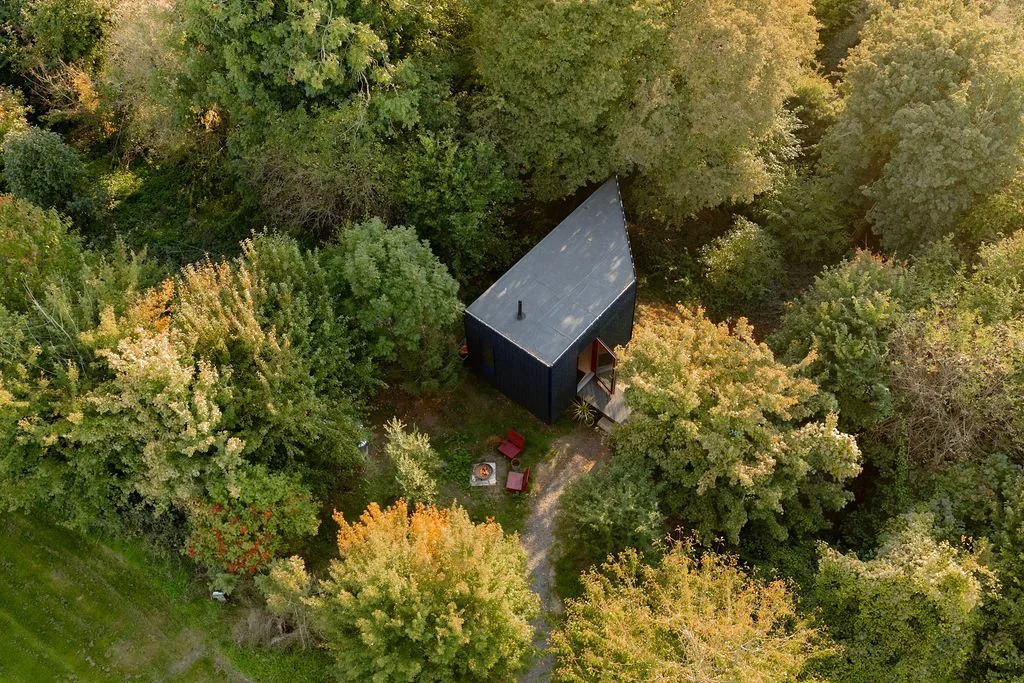
At ReFrame Studio, we specialise in the design of micro-houses, tiny homes and low-impact holiday cabins, creating architecture that responds sensitively to its setting. Our experience includes The Bide, a rural retreat in Dorset comprising two distinct architectural hideaways. The project reflects our approach to compact architecture as carefully considered objects that sit lightly within the landscape, with efficient layouts, strong connections to the outdoors and a strong sense of place.
Stays at The Bide can be booked at www.thebide.com.
What are micro-houses, tiny homes and holiday cabins?
Micro-houses, tiny homes and holiday cabins are compact buildings designed to make efficient use of limited space. They are typically smaller than standard residential homes and are often conceived as standalone structures in rural or sensitive settings.
Common uses include holiday retreats, guest accommodation, and carefully considered self-build projects where simplicity, flexibility and connection to the landscape are key. Unlike conventional housing, these projects require a more precise design approach, where every element is purposeful and carefully resolved.
Why Does Good Architecture Matter for Small Buildings?
In small buildings, good architecture is essential. Layout, proportion and natural light have a much greater impact, as every square metre counts. Thoughtful design helps ensure spaces feel calm and comfortable rather than constrained.
Small projects are also often subject to tighter planning controls and site limitations, particularly in rural or protected locations. A well-designed building that responds sensitively to its context not only improves the chances of planning approval, but also supports long-term durability, performance and value.
Our approach to micro-house and cabin design
At ReFrame Studio, our approach is context-led and carefully considered. We design micro-houses and cabins that respond to their setting, orientation and landscape, rather than applying a fixed aesthetic.
Layouts are efficient and well-proportioned, materials are chosen to sit quietly within their surroundings, and sustainability is embedded through low-energy principles and passive design strategies. The aim is to create compact buildings that feel purposeful, enduring and rooted in place.
Why Choose ReFrame Studio
Planning for micro-houses and holiday cabins often involves additional complexity. Rural and sensitive sites may be subject to countryside policies, conservation area controls or landscape designations.
Understanding whether a project falls under permitted development or requires full planning permission is crucial, as is the distinction between holiday use and permanent residential accommodation.
Sustainability, visual impact and low-impact construction are frequently key considerations. ReFrame Studio assesses these factors early, helping shape proposals that respond clearly to both planning policy and site-specific constraints.
Our Architectural Services for Micro Houses and Cabins
At ReFrame Studio, we provide a full architectural service for micro-houses, tiny homes and holiday cabins, including:
Feasibility studies and early site advice
Assessing planning constraints, site conditions and overall viability before you commit time or cost.Concept and detailed design
Developing carefully considered layouts, proportions and material strategies suited to compact living.Planning applications and approvals
Preparing and managing planning submissions, including work in rural or sensitive contexts.Technical design and coordination
Producing detailed technical drawings and coordinating with consultants to support buildability and quality.Support through construction
Assisting during the build to help protect design intent and resolve issues as they arise.
Through our experience designing The Bide, we have built a strong understanding of what’s involved in creating successful holiday retreats beyond the building itself. Where helpful, we can introduce clients to trusted collaborators who assist with branding, business planning and booking systems, helping support projects from initial idea through to operation.
Micro-houses & holiday cabin FAQs
-
A micro-house is a compact, self-contained building designed for efficient living, typically much smaller than a conventional home.
It focuses on careful layout, light and proportion to make the most of limited space.
-
The main difference is usually use rather than size.
A micro-house is often intended for residential use, while a holiday cabin is typically approved for short-term or holiday accommodation.
-
In many cases, yes. While some small structures may fall under permitted development or can utilise the Caravan Act, most micro-houses and holiday cabins require planning permission, particularly in rural or sensitive locations.
-
Not usually, unless it has specific planning approval for permanent residential use.
Many cabins are restricted to holiday or ancillary use, which is an important distinction in planning terms.
-
They can be, but rural planning policies are often strict.
Proposals typically need strong justification, sensitive design and a clear understanding of countryside planning policy.
-
There is no fixed minimum size, but successful micro-houses are carefully designed to balance comfort, functionality and Building Regulations requirements. Layout quality is often more important than overall floor area.
-
They can be, but this isn’t always the case. While smaller buildings use less material, high-quality detailing, bespoke design and site constraints can still influence overall cost.
-
Common challenges include countryside policy, visual impact, sustainability requirements, access, and restrictions on residential use. Early planning advice is key to navigating these issues.
-
Yes. A feasibility study is particularly valuable for small projects, helping to assess planning constraints, site limitations and realistic development potential before further investment.
-
The best size depends on use, site context and budget. Successful micro-houses are defined more by efficient planning and proportion than by a specific square metre figure.
-
Yes. Micro-houses can be well suited to low-energy or Passivhaus principles due to their compact form, provided the design carefully considers insulation, ventilation and orientation.
-
Yes. Where appropriate, designs can incorporate low-impact strategies such as reduced energy demand, alternative heating systems and careful integration with the landscape.
-
Materials are chosen based on context, durability and visual impact. Timber, natural finishes and robust, low-maintenance materials are often well suited to cabins and compact buildings.
-
In most cases, yes. Even small buildings usually require Building Regulations approval to ensure safety, performance and compliance.
Even if not required we would suggest they are designed to the relevant standards where possible or appropriate.
-
Yes. ReFrame Studio manages planning applications for micro-houses and cabins, including drawings, supporting statements and liaison with the local authority.
-
Yes, although these locations require a sensitive and carefully justified approach.
Design quality, scale and material choice are particularly important in protected landscapes.
-
Timescales vary depending on complexity and planning requirements, but early design and planning stages typically take several months before construction can begin.
-
Yes. Cabins are often well suited to uses such as home offices, studios or guest accommodation, subject to planning approval where required.
-
Services typically include feasibility studies, concept and detailed design, planning applications, technical design and support through construction.
-
The best first step is an initial conversation to discuss your site, ideas and goals.
From there, we can advise on feasibility, planning requirements and the most appropriate way forward.
ReFrame Studio is an official suppler of the Rural Diversification Collective. As a studio committed to innovative design and sustainable growth, joining this network allows us to better support landowners and rural entrepreneurs in unlocking the full potential of their property. By collaborating with fellow industry experts through the collective, we ensure our clients benefit from the latest insights and strategic thinking in rural development and diversification.
